

A bail bondsman is a risk-management specialist who provides a financial guarantee to the court. They aren't just lenders. If you're currently dealing with an arrest, you're likely wondering how do bail bondsman make money and if you'll ever get your funds back. It's a high-stakes business where the bondsman acts as a steady hand during a confusing legal crisis. Our job is to simplify the process while ensuring the court that a defendant will show up for their hearing.
It's normal to feel overwhelmed by the thought of non-refundable fees or the risk of losing property put up as collateral. You want your loved one home, but you don't want to feel scammed. We're here to pull back the curtain on the industry. This guide explains the financial mechanics behind bail bonds, including how fees are calculated and how agencies manage risk to secure your release. We'll break down the difference between a premium and collateral so you know exactly what you're paying for. By the end, you'll have the tools to choose a reputable agency with total confidence.
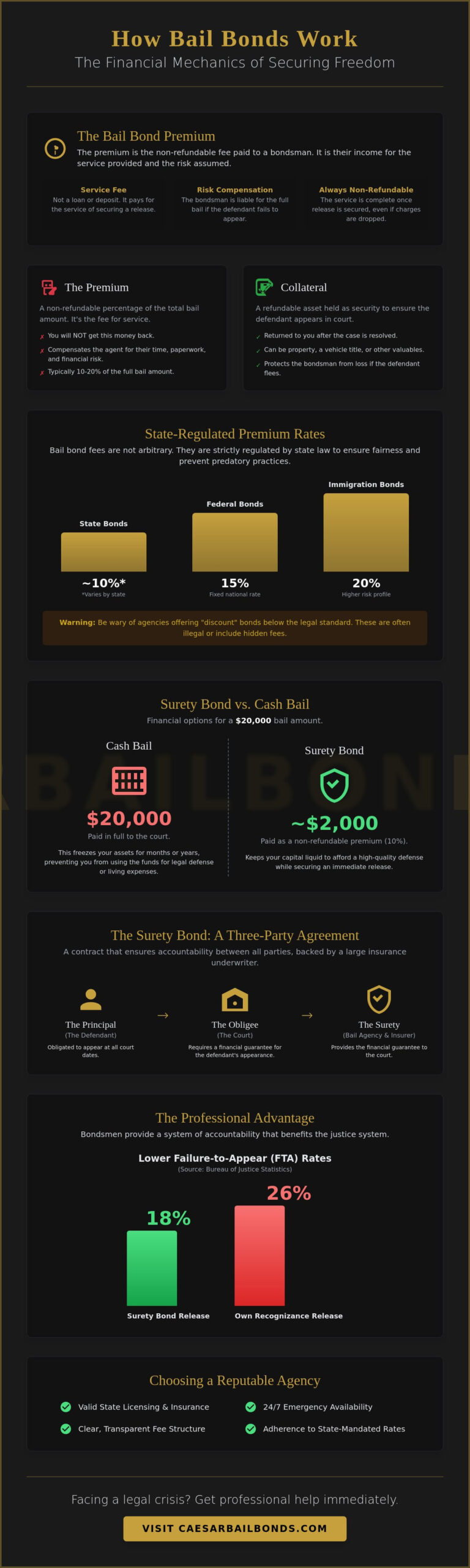
The premium is the foundation of the bail industry. It's a fee paid to a bail bondsman in exchange for posting the full bail amount with the court. This fee is a specific percentage of the total bail set by a judge. Understanding how bail bondsmen make money starts with this premium. It isn't a down payment on a loan. Instead, it's a service fee for the professional guarantee and immediate release provided to the defendant. Most people confuse this fee with a deposit, but it works more like an insurance policy. You pay for the protection and the logistical work required to secure a release.
This fee is non-refundable because the service is delivered the moment the jail door opens. When an agency writes a bond, they take on a massive financial risk. If a defendant skips court, the bondsman is responsible for the entire bail amount. The premium compensates the agent for this risk, their 24/7 availability, and the complex paperwork required for court filings. It's a one-time cost for a specific result: freedom while awaiting trial. Even if the prosecutor drops the charges the next day, the bondsman has already performed the service of securing the release. Think of it like an airline ticket. Once the flight has safely landed, the service is complete.
It's vital to distinguish between the premium and collateral. The premium is the agent's income. You will never get this money back. Collateral, however, is security held to ensure the defendant appears in court. This could be a car title or a property deed. Unlike the premium, collateral is returned once the case concludes and the bond is exonerated. Clear communication about these two distinct financial elements is how a professional agency builds trust during a crisis. It ensures you aren't surprised by costs during an already stressful time.
State laws govern exactly what an agency can charge. These regulations ensure that fees remain fair and consistent across the board. While rates vary by jurisdiction, most states set a standard percentage for state-level bonds. For instance, federal bail bonds are set at a 15 percent premium, while immigration bonds are set at 20 percent. You should be wary of any agency offering "discount" bonds significantly below the legal standard. These offers are often illegal or hide predatory terms that could cost you more in the long run. A reputable agency follows strict state-mandated pricing guidelines to protect both their license and your rights. This transparency is a key part of how bail bondsmen make money while maintaining professional standards. If you want a deeper look at how these regulations apply locally, our guide on bail bond cost Elyria Ohio residents face under state law breaks down the specific rules that govern every transaction.
When a judge sets bail at $20,000, you have two choices. You can pay the full amount in cash to the court, or you can hire a professional to post a bond. Paying cash means that money is gone until the case ends. It sits in a court account for months or even years. A surety bond is different. It's a contract where the bondsman guarantees the full amount to the court. This setup is central to how do bail bondsman make money. They charge a small percentage and take on the liability so you don't have to drain your savings.
Surety bonds rely on a three-party agreement that ensures everyone stays accountable. First, the defendant is the principal who is obligated to appear in court. Second, the court is the obligee that requires the financial guarantee. Third, the bail agency is the surety providing the backing. Most local agencies aren't acting alone. They're backed by large insurance corporations that underwrite the risks. The California Department of Insurance (CDI) regulates these entities to ensure they maintain the capital needed to pay high-value bonds. This backing allows a local agent to post a $50,000 bond even if they don't have that much cash on hand.
Courts often prefer this system because it adds a layer of professional monitoring. A bondsman has a direct financial incentive to make sure the defendant shows up. Data from the Bureau of Justice Statistics supports this. Defendants released on a surety bond had a failure-to-appear rate of only 18 percent. This is much lower than the 26 percent rate for those released on their own recognizance. This efficiency is a primary reason why the justice system relies on the private sector. It's a key part of how do bail bondsman make money while reducing the burden on the public court system.
The biggest advantage is keeping your assets liquid. Legal fees are expensive. If you tie up every cent in a cash bail, you can't afford a high-quality defense. A bondsman lets you keep your capital for the trial itself. They also handle the logistics. Jails are slow and bureaucratic. A professional knows the staff and the shortcuts. If you are in a rush, contacting an emergency 24 hour bail bonds service is the fastest way to get a loved one out of a cell and back to their life. We handle the paperwork so you can focus on your family.
Every bail bond is a calculated risk. When an agency posts a bond, they are essentially betting that the defendant will show up for every court date. If that bet fails, the agency is on the hook for the full amount. This risk is a central reason behind how bail bonds work, as the premium paid by the client covers the costs of managing this potential loss. To minimize these hazards, bondsmen use a process called underwriting to vet each case before they ever sign a contract. This careful vetting is a major part of how do bail bondsman make money while keeping the business sustainable.
Underwriting is the street-smart side of the business. An agent doesn't just look at the charges. They look at the person. We evaluate community ties, employment history, and past criminal records to determine flight risk. A defendant with a steady job and a family in the area is much less likely to run than someone with no local roots. Professional monitoring helps ensure that defendants are 28 percent less likely to fail to appear compared to other release methods, according to a May 2026 Bail Studies report.
We often require an indemnitor, or co-signer, to add another layer of security. This person is usually a friend or family member who takes financial responsibility if the defendant skips bail. If the risk is too high or the indemnitor doesn't have stable qualifications, an agency might deny the bond entirely. Protecting the business is part of how do bail bondsman make money, so we only move forward when the risk assessment shows a high probability of court attendance. We prioritize cases where we can act as a reliable lifeline for someone truly committed to their legal defense.
Collateral acts as a physical guarantee. While the premium is the fee for our service, collateral is the security for the court's full bail amount. For smaller cases, like a misdemeanor bail bond, we might waive collateral based on the underwriting results. However, for large felony bonds, we often require assets to offset the higher stakes. Common types of collateral include:
We hold these items in trust. They are legally protected and cannot be used for the agency's daily operations. The only way we can touch collateral is if the defendant fails to appear and the court forfeits the bond. Once the case concludes and the bond is exonerated, the collateral is returned to the owner. This process usually takes a few weeks after the final court date. It's a transparent system designed to protect everyone involved while ensuring the defendant stays on the right side of the law.
Misunderstanding the financial side of bail adds unnecessary stress to an already tense situation. One of the most common myths is that the premium is refundable if the court drops the charges or if the defendant is found innocent. This isn't true. The premium is a service fee for the labor, licensing, and financial risk involved in the release. Once the defendant is out of custody, the bondsman has fulfilled their end of the contract. The money has been earned and will not be returned, regardless of the trial's outcome.
Another frequent error is thinking the bondsman pockets the entire bail amount. If a judge sets bail at $25,000, the bondsman doesn't receive that sum from the court. They only receive the premium from the client. The larger bail amount is simply a promise they make to the state. Understanding exactly how do bail bondsman make money requires seeing them as risk-management specialists rather than banks. They provide the guarantee so you don't have to provide the full cash amount. This keeps your personal capital available for other needs like legal defense.
If a defendant skips a court date, the bond enters forfeiture. This is the opposite of a payday for the bondsman. It's a financial emergency. The court demands the full bail amount from the agency immediately. To minimize these losses, agencies often hire recovery agents to locate the defendant and return them to custody. This is why the role of the co-signer is so critical. If the defendant cannot be found, the co-signer becomes legally liable for the entire bail amount. We take every skip seriously because a single forfeiture can wipe out the profits from dozens of successful bonds.
The premium is a flat, one-time fee, not an interest-bearing loan. It doesn't matter if the trial lasts two months or two years. The cost to the client remains the same. The bondsman doesn't profit more if the case takes longer to resolve. Most professional agencies don't offer financing for the premium itself because it's a regulated service fee. You pay for the speed and the expertise required to navigate the jail system. If you need a fast and professional surety bail bonds Ohio, having the premium ready is the most effective way to secure an immediate release. This transparency is how do bail bondsman make money while providing a vital lifeline to families in crisis.
Selecting the right agency is the final step in resolving a high-stress legal crisis. You now understand the financial mechanics of the industry and how do bail bondsman make money through regulated premiums. This knowledge should empower you to spot red flags before you sign a contract. A trustworthy agency won't pressure you or hide the terms of your collateral. They act as a seasoned guide who simplifies a confusing landscape. They provide the steady hand you need when the stakes are at their highest. Trust is built on transparency and a "boots-on-the-ground" reality.
Every hour spent behind bars is an hour of lost wages and increased personal risk. Professional agents operate with a sense of immediate availability because they know the system doesn't wait for business hours. They have established relationships with local court clerks and jail staff in areas like Elyria and Lorain. This local presence allows them to push through paperwork that might otherwise stall in a bureaucratic backlog. They handle the logistical heavy lifting so you can focus on the safety of your family. Speed is the most valuable service an agency provides during an emergency.
Verify the agent's license with state regulators before you commit to their services. A reputable provider is always transparent about their fees and the return process for collateral assets. They should explain the risks clearly without making false promises about the court's final timeline. This honesty is a hallmark of a professional business model. It ensures you know exactly what you're paying for and what to expect as the case moves forward. Clear communication is a sign that the agency prioritizes your rights as much as their own professional standing.
To get the process started quickly, you need to have specific information ready. Gather the defendant's full legal name, the specific jail where they are being held, and the list of charges against them. During your initial consultation, ask the agent about their experience with that specific court. Ask how quickly they can arrive at the facility to post the bond. A proactive agent will provide direct answers and a clear path to resolution. They won't hide behind high-level abstractions or vague promises.
If you are facing a crisis right now, don't wait for the situation to get worse. You can Contact Caesar Bail Bonds for 24/7 emergency assistance and get the guidance you need immediately. We understand the local protocols and are ready to act on your behalf to secure a fast, professional release. Our team is available around the clock to ensure you have a reliable lifeline when it matters most. This responsiveness is a core part of how do bail bondsman make money while serving as a dedicated ally for the community.
Navigating the legal system is much easier when you understand the financial mechanics behind it. You now know that the premium is a regulated service fee and that collateral is a separate security measure held in trust until the case is exonerated. This transparency helps you avoid common scams and predatory practices during a time of crisis. By uncovering how do bail bondsman make money, you can move forward with a clear head and a solid plan for your loved one's defense. Knowledge is your best tool for managing this high-stakes situation and ensuring you don't pay more than is legally required.
Don't let the complexity of the bail process keep you in the dark or cause unnecessary delays. We provide 24/7 emergency availability and professional surety and transfer bonds to get results when every minute counts. Whether you need experienced felony or misdemeanor support, our team acts as a dedicated, street-smart guide through the jail protocols. Secure a Fast Release with Caesar Bail Bonds and bring your family member home today. You aren't alone in this. We have the "boots-on-the-ground" experience to guide you through every step with total confidence.
No, you don't receive a refund for the premium even if the court finds you innocent or drops the charges. This fee is a non-refundable payment for the professional service of securing your immediate release. It's the primary way how do bail bondsman make money while taking on the financial risk of your bond. Once the jail releases the defendant, the bondsman has fulfilled their contractual obligation.
Bail is the full cash amount a judge requires for a defendant to leave jail before their trial. A bail bond is a legal guarantee provided by a surety company that promises the court the full bail amount will be paid if the defendant skips their hearings. Instead of paying the full cash bail yourself, you pay a smaller, regulated premium to an agency to provide this guarantee for you.
State insurance departments regulate premium rates, which typically hover around 10 percent of the total bail amount. For a $10,000 bond, the standard fee is usually 1,000 dollars. This percentage is a fixed cost for the duration of the case and does not include interest or hidden monthly payments. Professional agencies always follow these state-mandated pricing structures to ensure transparency.
No, an agency has no legal authority to change or negotiate the bail amount set by a judge. Only a judge or magistrate can modify the bail during a scheduled court hearing. A bondsman's role is strictly to provide the financial backing for the amount already determined by the court. If you believe the bail is too high, you should consult with legal counsel to request a reduction hearing.
The court will forfeit the bond if a defendant misses their hearing, making the full bail amount due immediately. If this happens, the agency has the legal right to seize and sell the collateral to cover the court's demand. This is why agencies vet defendants so carefully through underwriting. Collateral is only returned after the case is fully resolved and the court exonerates the bond, provided all appearances were made.
A co-signer, or indemnitor, provides an extra layer of accountability by taking financial responsibility for the defendant's appearance. They help the agency monitor the defendant and ensure they attend every required court date. Most agencies require a co-signer for high-value bonds to mitigate the risk of forfeiture. This is a standard part of how do bail bondsman make money while protecting their business from massive financial losses.
Yes, you can pay the full cash bail directly to the court or wait for a judge to grant a release on your own recognizance (OR). Some jurisdictions also offer pretrial services or electronic monitoring as alternatives to financial bail. However, paying the full cash amount ties up your capital for the duration of the case, which can last for many months. A surety bond allows you to stay liquid while still securing a release.
The release process typically takes between two to eight hours after the agent files the paperwork with the jail. This timeframe depends heavily on the jail's current volume and staffing levels. A professional agent with local experience in cities like Elyria or Lorain can often navigate the system faster. We work quickly to ensure the defendant spends the least amount of time possible in custody.
If you are in need of a bail bonds service in OH, look no further than Caesar Bail Bonds LLC. For a great service in Lorain, Elyria, North Ridgeville, Avon Lake, Oberlin, Sandusky, Vermillion, Toledo, Port Clinton, Greene County, Columbus as well as in the entire state of Ohio call on Caesar Bail Bonds LLC.
Get Quote !
"*" indicates required fields