

Electronic bail processing is defined as the digital handling of bail paperwork, including remote electronic signatures, online indemnity agreements, and real-time submission to courts and law enforcement systems. This technology replaces the traditional stack of physical forms with secure digital platforms that defendants, cosigners, and bail agents can access from anywhere. Electronic bond platforms have reduced paperwork time from 45 minutes to under 10 minutes. That single shift changes everything for a family waiting on a loved one’s release. For Ohio residents navigating the bail system in 2026, understanding how this technology works is the first practical step toward a faster release.
Electronic bail processing, also called digital bail processing or automated bail submission, replaces paper contracts with online platforms that handle every document step remotely. The defendant or a cosigner receives a secure link, reviews the indemnity agreement, and signs electronically from a phone, tablet, or computer. The signed documents transmit instantly to the bail agent, who then files them with the court or jail.
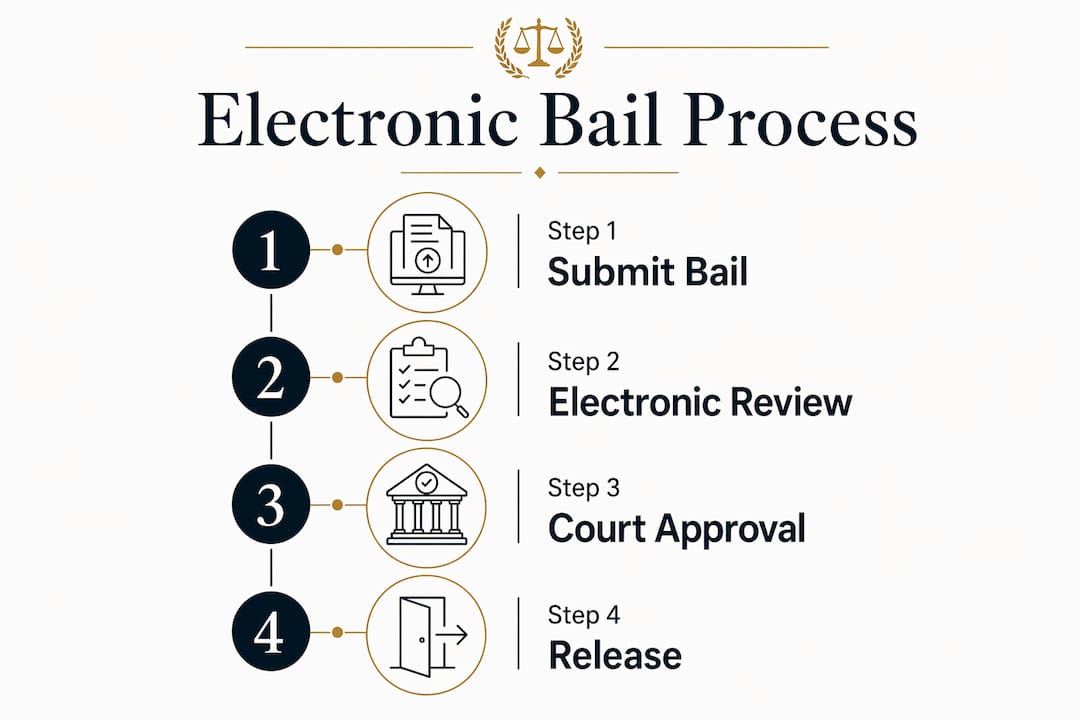
The workflow moves through four clear steps once a judge sets bail:
Digital systems also integrate with court databases and law enforcement networks. New bail notification systems process approximately 700 bail condition orders weekly, giving law enforcement real-time access to restrictions. That means officers in the field know a defendant’s bail conditions the moment they are set, reducing the risk of accidental violations.
Pro Tip: Complete all digital documents in one session. Partially signed agreements can trigger system timeouts, which restart the clock on your submission and delay the release.

Electronic bail processing delivers clear benefits, but it also comes with real limitations that Ohio families should understand before counting on a fast release.
Electronic paperwork does not override what happens inside the jail. Physical jail processing delays remain even when bond documents arrive instantly. Staffing shortages and overcrowding can add hours to a release regardless of how fast the digital submission moves. Technology also introduces its own friction points. Device signal problems in rural Ohio counties can interrupt electronic signature sessions. Electronic monitoring devices require daily charging of 60–120 minutes, and missing that window can trigger a violation alert even when the defendant has done nothing wrong.
Pro Tip: If electronic monitoring is a likely bail condition, gather documentation of stable housing and a reliable power source before the hearing. Judges weigh practical compliance factors when setting monitoring terms.
Pretrial electronic monitoring is a bail condition that uses technology to track a defendant’s location and movements while they await trial. It is not the same as electronic bail processing, but the two systems work together. Electronic bail processing sets the legal framework; electronic monitoring enforces the conditions that come with it.
| Device type | Key features | Typical use case |
|---|---|---|
| GPS ankle monitor | Real-time location tracking, geo-fencing, tamper alerts | Flight risk defendants, felony charges |
| RF (radio frequency) monitor | Detects presence at home during curfew hours | Low-risk defendants with curfew conditions |
| Hybrid GPS/RF device | Combines location tracking with home confinement verification | Moderate-risk defendants |
GPS devices enforce curfews and geographic restrictions with automatic alerts for tampering or boundary violations. Exclusion zones can be programmed to keep a defendant away from specific addresses, such as a victim’s home or workplace.
Electronic monitoring is classified as a “least restrictive” pretrial condition, meaning courts use it to balance community safety with a defendant’s right to pretrial freedom. It is not punishment. It is a compliance tool designed to ensure court appearance while keeping defendants out of jail.
One technical issue families rarely anticipate: signal reflection in dense urban areas like Columbus or Cleveland can cause GPS inaccuracies. GPS monitoring inaccuracies from signal bounce require careful supervision to avoid false violation reports. An attorney who understands this can challenge inaccurate alerts before they escalate.
Legal counsel plays a direct role in securing electronic monitoring as a bail condition by filing motions with supporting evidence. Defendants who arrive at hearings with documented community ties, employment records, and housing stability give their attorneys the strongest possible argument.
Electronic bail processing applies to most standard bail situations in Ohio, but it delivers the greatest value in specific circumstances.
For out-of-county warrant situations, electronic platforms make it possible to coordinate bail across jurisdictions without requiring everyone to be in the same room. That is a significant practical advantage for Ohio families dealing with transfer bail situations.
Strong community ties such as employment, stable housing, and personal references increase the likelihood a judge grants electronic monitoring as a bail condition. Prepare that documentation before the hearing, not after.
Pro Tip: Call the bail agent before the arraignment if possible. An experienced agent can advise on what documentation to bring and whether electronic monitoring is a realistic option given the charges and the judge’s history.
Families should also ask the bail agent directly whether the jail in question has integrated electronic submission. Not every Ohio facility processes digital bonds at the same speed. Knowing the jail’s internal workflow helps set realistic expectations for release timing.
Electronic bail processing cuts paperwork time from 45 minutes to under 10 minutes, but jail logistics, monitoring compliance, and proper documentation determine how fast a defendant actually walks out.
| Point | Details |
|---|---|
| Paperwork speed | Digital platforms reduce bond paperwork from 45 minutes to under 10 minutes. |
| Jail delays still apply | Electronic submission cannot override internal jail staffing or overcrowding delays. |
| Monitoring costs | Pretrial GPS monitoring runs $5–$15 per day, making it a real alternative to full cash bail. |
| Charging compliance | Electronic monitoring devices need 60–120 minutes of daily charging to avoid violation alerts. |
| Documentation matters | Employment records, stable housing, and references strengthen requests for monitoring as a bail condition. |
The technology works. That is not the question. The question is whether families understand what it can and cannot do before they rely on it.
The most common mistake I see is treating fast paperwork as a guaranteed fast release. A bond can be submitted electronically in eight minutes and the defendant can still sit in a holding cell for six hours because the jail is short-staffed. Electronic processing removes one bottleneck. It does not remove all of them.
The second thing I have learned is that electronic monitoring is underused as a bail strategy. Families focus on posting bond and forget that asking for monitoring as a condition can sometimes get a defendant out faster and at lower cost than a full cash bond. The daily cost of $5–$15 is manageable for most families. The key is having an attorney who knows how to present the motion and a bail agent who can coordinate the monitoring setup quickly.
My honest advice: use the technology, but pair it with experienced professionals who know the specific jails and courts in your Ohio county. The platform is only as effective as the people operating it.
— Anthony
Caesarbailbonds operates 24 hours a day, 7 days a week across Ohio, including Columbus, Cincinnati, Dayton, Akron, and Canton. Our agents handle electronic bond submissions, remote indemnity agreements, and digital payment processing so your family does not have to drive anywhere to get the paperwork done.

When time matters, having a licensed agent who knows how to work with Ohio’s court and jail systems is the difference between a fast release and an unnecessary overnight stay. Caesarbailbonds guides families through every step, from the first call to the moment your loved one walks out. Start the process now with our online bail bond application, or explore your full options through our Ohio bail bonds guide to understand exactly what to expect.
Electronic bail processing is the use of digital platforms to complete bail paperwork remotely, including electronic signatures and online payment, replacing the need for in-person document handling at a bondsman’s office or jail.
Pretrial GPS electronic monitoring typically costs $5–$15 per day, making it a lower-cost alternative to cash bail for defendants who qualify for it as a bond condition.
Yes. Remote indemnity agreements allow out-of-state cosigners to sign all required documents online without traveling to Ohio, removing one of the most common delays in the bail process.
Failure to charge an electronic monitoring device for the required 60–120 minutes daily can trigger a violation alert, which may result in bail revocation even if the defendant has not broken any other condition.
Electronic processing speeds up paperwork significantly, but physical jail logistics including staffing levels and overcrowding can still delay the actual release by several hours regardless of how quickly the bond documents are submitted.
If you are in need of a bail bonds service in OH, look no further than Caesar Bail Bonds LLC. For a great service in Lorain, Elyria, North Ridgeville, Avon Lake, Oberlin, Sandusky, Vermillion, Toledo, Port Clinton, Greene County, Columbus as well as in the entire state of Ohio call on Caesar Bail Bonds LLC.
Get Quote !
"*" indicates required fields