
Menu

Paying a bail bond for a family member means either posting the full court-set bail amount directly or paying a non-refundable premium to a licensed bail bondsman, typically 10–20% of the total bail. Each option carries distinct financial and legal responsibilities that every family member in Ohio needs to understand before acting. The surety bond route, handled through a licensed bondsman, preserves most of your funds for legal costs while still securing your loved one’s release. This guide walks you through every step of the bail bond process, from gathering documents to avoiding costly mistakes.
Preparation is the single biggest factor in how fast your loved one gets out of jail. Incomplete or incorrect data causes delays exceeding 12 hours in roughly 40% of bail releases. Getting organized before you call a bondsman or the court clerk cuts that risk significantly.
Collect the following details before making any calls:
The bail amount and charge type determine whether you are dealing with a misdemeanor or felony bond. Felony bonds carry higher premiums and stricter cosigner requirements. Knowing the charge category upfront helps you prepare the right paperwork.
Pro Tip: Designate one family member as the single point of contact with the bondsman. Multiple contacts providing conflicting information increase processing errors and slow your loved one’s release.

The bail bond process follows a clear sequence. Skipping steps or acting out of order causes delays and can cost your family money.
The table below compares the two main payment options:
| Option | Cost | Refundable? | Best for |
|---|---|---|---|
| Cash bail (full amount) | 100% of bail set by court | Yes, after all appearances | Families with full funds available |
| Surety bond (bondsman) | 10–20% premium, non-refundable | No | Families preserving funds for legal costs |
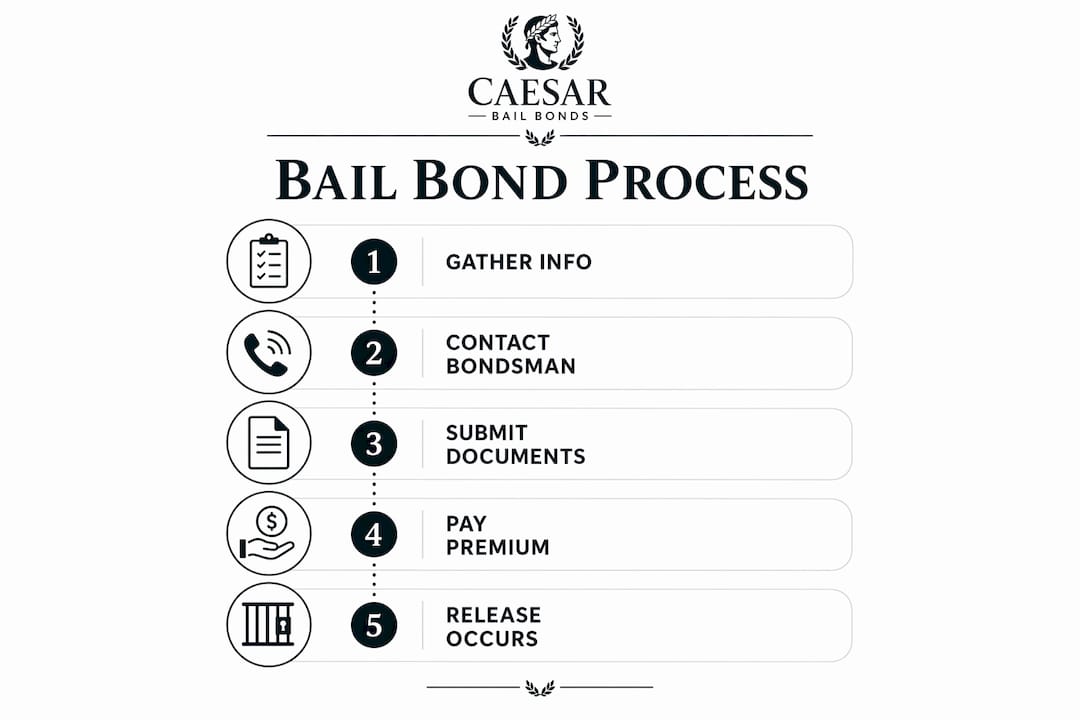
Pro Tip: Ask the bondsman about their online bail bond application process. Submitting documents digitally often speeds up processing compared to in-person paperwork.
Speed feels urgent when a loved one is in jail. That urgency causes most of the costly mistakes families make in the bail bond process.
Paying a bail bond premium before arraignment can be an unnecessary financial loss. If the judge grants own-recognizance release shortly after arraignment, you lose the premium with no recourse. Waiting a few hours for the arraignment can save your family 10–15% of the total bail amount.
The most frequent mistakes include:
Financial health evaluation is critical before bonding. Keep enough funds available for attorney retainers, court costs, and your household expenses throughout the legal process.
Judges weigh family and community ties heavily when setting bail or deciding whether to grant own-recognizance release. Strong local connections signal to the court that the defendant is unlikely to flee. This is one of the most underused tools available to families in the bail process.
Community ties that carry legal weight include:
Immediate family dependents weigh more heavily than extended family in a judge’s decision. A defendant who is the primary caregiver for young children presents a stronger case for reduced bail or release on recognizance than one with only distant relatives nearby.
Your attorney can present these ties formally at the bail hearing. Gather documentation in advance: pay stubs, lease agreements, school enrollment records for children, and letters from employers or community leaders. Coordinating this effort with legal counsel before the hearing gives your family the best chance of a favorable bail decision.
Paying a bail bond for a family member in Ohio requires preparation, clear communication, and a full understanding of your financial and legal obligations before you sign anything.
| Point | Details |
|---|---|
| Two payment options exist | Cash bail is refundable; a surety bond premium of 10–20% is not, regardless of case outcome. |
| Preparation prevents delays | Incomplete defendant information causes delays over 12 hours in roughly 40% of cases. |
| Cosigner liability is serious | Signing a bond makes you responsible for the full bail amount if the defendant misses court. |
| Wait for arraignment first | Paying a premium before arraignment risks losing 10–15% if the judge grants own-recognizance release. |
| Community ties reduce bail | Documented employment, residency, and family dependents can lower bail or secure release without a bond. |
The families who move fastest through the bail process are not the ones who call the most people. They are the ones who call the right person once, with all the information ready.
I have seen families spend hours on the phone with three different bondsmen, each getting a slightly different story from a different family member. The result is confusion, delays, and sometimes a second night in jail that was completely avoidable. The single-point-of-contact rule is not just a convenience tip. It is the difference between a 4-hour release and a 20-hour one.
The other pattern I see repeatedly is families cosigning bonds without fully reading the agreement. The premium feels like the only number that matters in the moment. The full bail amount, which is what you actually owe if your loved one skips court, gets glossed over. That number can be $10,000, $50,000, or more. Cosigners must understand their legal obligations fully and maintain open communication with the bondsman throughout the case, not just at signing.
My honest advice: slow down for 30 minutes before you act. Confirm the arraignment time. Talk to an attorney, even briefly. Assess whether own-recognizance release is realistic. Then, if a bond is the right move, act fast and decisively with one organized family member leading the process. That 30-minute pause can save thousands of dollars and weeks of stress.
— Anthony
When your family needs to secure a loved one’s release, every hour matters. Caesarbailbonds operates 24 hours a day, 7 days a week across Ohio, with licensed agents serving Columbus, Cincinnati, Dayton, Akron, Canton, and surrounding areas.

Our agents come directly to you, whether you are at home or at the jail, so you never have to figure out the process alone. We handle felony and misdemeanor cases, transfer bail across Ohio jurisdictions, and guide your family through every step from paperwork to release. Our 24-hour Ohio bail bond service means a licensed agent is always available to answer your questions and post bond fast. Call us now or start your application online to get your loved one home.
A licensed bail bondsman charges a non-refundable premium, typically 10% of the total bail amount set by the court. If the court sets bail at $10,000, the premium is $1,000, paid upfront.
Release timing ranges from 2 to 24 hours after the bond is posted, depending on the facility’s processing speed and the completeness of the paperwork submitted.
Many Ohio bondsmen accept remote cosigners using electronic signatures and digital document submission. Contact the bondsman directly to confirm their remote cosigning process.
If the defendant fails to appear, you as the cosigner become legally responsible for the full bail amount, not just the premium you paid. The bondsman may also hire a recovery agent to locate the defendant.
The bail bond premium is non-refundable regardless of the case outcome, including if charges are dropped or the defendant is found not guilty. Only cash bail paid directly to the court is refundable after all court appearances are completed.
If you are in need of a bail bonds service in OH, look no further than Caesar Bail Bonds LLC. For a great service in Lorain, Elyria, North Ridgeville, Avon Lake, Oberlin, Sandusky, Vermillion, Toledo, Port Clinton, Greene County, Columbus as well as in the entire state of Ohio call on Caesar Bail Bonds LLC.
Get Quote !
"*" indicates required fields